
Most people don’t think about their bedroom as a “health space.” It’s just where you crash at the end of the day. Lights off. Phone down. Done.
But here’s the thing — it’s the one room where your body is in contact with fabric for hours without interruption. If you’re going to make one space cleaner and calmer, this is probably the one.
Creating a non-toxic bedroom doesn’t start with repainting walls or buying air purifiers. It starts with what’s directly under you.
Step One: Rethink Your Sheets
Your bedsheets are the most used item in your entire home. Not the sofa. Not the kitchen table. The sheets.
If they’re made from heavily processed fabrics, dyed and treated multiple times, that’s what your skin rests against every night. Switching to organic cotton bedsheets isn’t dramatic — it’s just practical.
A breathable natural fabric feels lighter and less coated. It doesn’t trap heat the same way synthetic satin or polyester blends can. That’s one of those organic bedding benefits you notice slowly, not instantly.
Step Two: Make the Bed Simpler
We tend to layer beds with whatever looks good. Decorative covers. Mixed fabrics. Trend-driven pieces.
But a non-toxic bedroom works better when it’s simpler. Fewer layers. Fewer materials. Things you can wash easily and often.
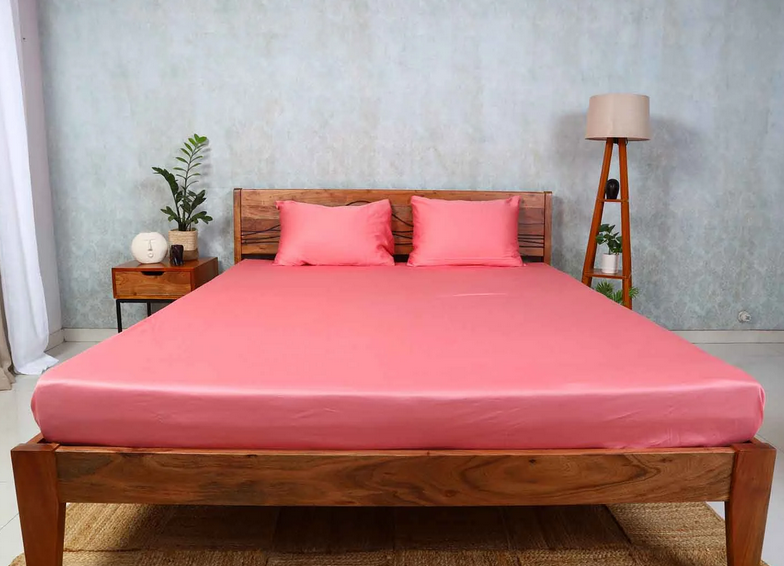
The Aloha Plain Organic Bedsheet fits into that idea well. It’s straightforward. No flashy finishes. Just organic material doing its job quietly.
Step Three: Pay Attention to Temperature
Overheating at night isn’t always about the mattress. Sometimes it’s the fabric.
Synthetic sheets can trap warmth. Breathable natural fabric allows airflow, which makes a difference in humid climates or warm rooms. A chemical-free sleep environment should also feel physically comfortable — not stuffy.
Step Four: Stop Masking, Start Cleaning
Candles and room sprays are common in bedrooms. We like the idea of a “fresh” smell.
But in a non-toxic bedroom, freshness usually comes from clean fabric and air circulation — not added fragrance. When you rely on natural materials, you don’t need to mask anything.
A Different Way to Look at It
Think of your bedroom like your daily reset space. It doesn’t need to be extreme or clinical. It just needs to feel calm and uncomplicated.
A non-toxic bedroom is really about reducing what doesn’t serve you — heavy finishes, artificial coatings, excess layers.
Bottom Line
You don’t need a complete makeover to improve your sleep space. Start with the layer that touches you every night.
Aloha focuses on organic materials and thoughtful construction, offering bedding that supports a cleaner, more breathable sleep setup. Sometimes the most meaningful changes are the quiet ones you don’t notice — except that you sleep a little better.